What is a music cue sheet?
A music cue sheet is the record of every piece of music heard in a finished film or episode. Each row is one use: the title, how it was used, where it starts and ends, how long it plays, and who wrote and published it, with their performing rights organization (PRO) and share. When the program is broadcast, streamed or screened, PROs such as ASCAP, BMI, SESAC, PRS, SOCAN and GEMA match those performances to the cue sheet to pay the writers and publishers. Distributors usually list it as a delivery item beside the music licences.
- 01 · Low Tide · BI · 01:14:42:10–01:16:05:18 · 1:23 · Mara Ellis (ASCAP) 100% / Northlight Songs (ASCAP) 100%.
- 02 · Low Tide · ET · 01:58:10:00–01:59:02:12 · 0:53 · same writers and publishers.
- Two rows, one composition: each use is reported and paid separately. Fictional title and rights holders.
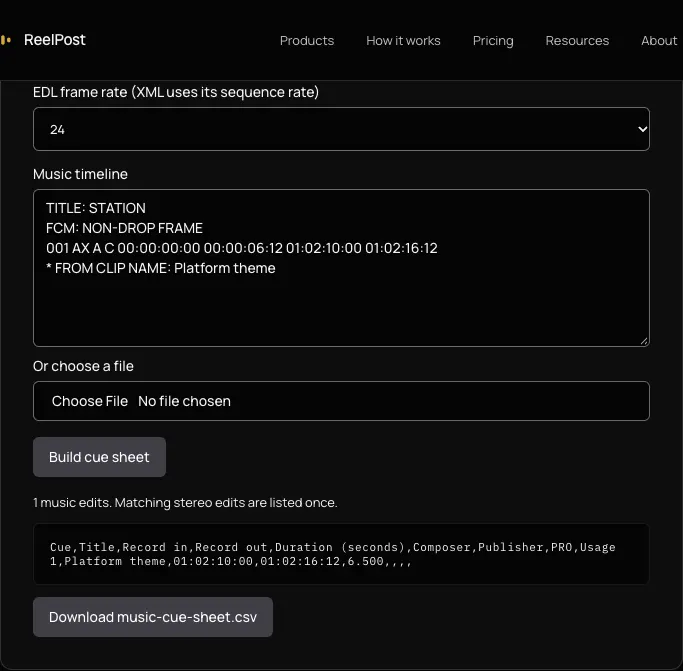
What each row records
A cue sheet row carries the cue number, the registered title of the work, the usage type, timecode in and out, duration, the composers and publishers with their society and percentage, and often the performing artist, the licensor, ISRC and IPI numbers. One composition can appear several times in a film. Each appearance is its own row, because each is a separate performance with its own duration and context.
The header names the production: title, alternate titles, episode number where relevant, production company, runtime, version and the date of the cut. A theatrical version and a broadcast edit can contain different music, so the header should make clear which master the timings describe.
Usage types
Societies pay different rates for different uses, so each row states how the audience heard the music. The common codes are BI (background instrumental), BV (background vocal), VI (visual instrumental, where the source of the music is on screen), VV (visual vocal, such as a character singing), MT (main title theme) and ET (end title). Some societies add others for logos, trailers or promos.
Check the receiving society’s current definitions before filing. A song playing on a car radio in shot and the same song laid under a montage are reported differently, even when the timings match.
Who prepares it, and when
The production company is responsible for the cue sheet, and in practice the music supervisor or post-production supervisor prepares it once the final mix is locked. The edit decision list gives a first draft of music edits, but the reference is the mix that reaches the audience: cues get shortened, crossfaded or replaced late in the mix.
Writers and publishers depend on the cue sheet for performance royalties, and distributors and E&O insurers rely on it to check that every use is licensed. A missing or wrong cue sheet means unpaid royalties for the people who made the music, and can hold up a delivery.
Checking it against the licences
Before filing, follow every row back to a signed licence. The title, writers, publishers and splits on the cue sheet should match the sync licence (for the composition) and the master use licence (for the recording). The writer shares should total 100 percent, as should the publisher shares. A cue with no licence on file is a clearance problem to resolve before delivery, not just a paperwork gap.
Software can do the first pass. ReelPost matches each licensed track’s audio against the final mix to find where it plays, fills writers, publishers and splits from the licences, flags music with no licence on file, and exports the reviewed cue sheet. A person still confirms each usage type and approves the sheet before it is filed.
Questions about this resource
Which instructions apply to my particular delivery?
Confirm the destination, title version and deliverable with the receiving team. Use the linked references and worked example to prepare questions before you send a final file.
Can my team see this workflow on a demo?
Join the ReelPost waitlist with your email and reply to the welcome message. A team member can arrange a walkthrough around the deliverable on your schedule.